Space · 45 items
Space Size Comparison
Compare all 45 space on SizeComparison.games — from the largest, the Betelgeuse at 1,188,000,000 km (738,189,000 mi), to the smallest, the Perseverance Rover at 3 m (9 ft 10 in).
Space is where our everyday sense of size breaks down completely. Earth feels enormous when you are standing on it, yet it is a small blue dot next to Jupiter, and Jupiter is a small dot next to the Sun. This page lists 45 objects from space — planets, moons, stars, asteroids, rockets and space stations — so you can compare them all by the same measure: their size in metres.
The first thing to notice is the range. The smallest objects here, like the asteroid Bennu at about 490 metres across, are smaller than many buildings. The largest, the red supergiant star Betelgeuse, is more than a trillion metres across — so wide that if it replaced the Sun, it would swallow Mercury, Venus, Earth and Mars. Between those extremes sit the familiar planets. Mercury is about 4,879 kilometres across, Mars about 6,779 kilometres, Earth about 12,742 kilometres, and Jupiter about 139,820 kilometres. Each step up is not a small increase; it is a jump that is hard to picture without a drawing, which is why the Compare tool is so useful for space objects.
It also helps to remember what each figure actually measures. For planets, moons and stars, the figure is a diameter — the distance straight through the middle. For rockets such as the Saturn V and Starship, it is a height, because a rocket stands upright on the launch pad. For the International Space Station, it is a length, measured from one end of its solar arrays to the other. The table below states the measurement type for every item, so a diameter is never silently compared with a height.
Some space figures are exact and some are approximate, and the difference matters. The diameters of the eight planets come from NASA and are well measured, so they are not marked approximate. Star diameters are another story: a star is a ball of hot gas with no hard surface, and its apparent size changes with the method used to measure it, so Betelgeuse, Antares, Rigel, Sirius and others are marked approximate. The same applies to small moons, asteroids and comets, where published estimates vary. Our sources page explains this in detail, and every approximate figure in the table carries an "approx." label.
Playing with these numbers is the best way to learn them. Guess how many Earths would fit across the Sun — the answer is about 109 — then check yourself in the Daily game or the Quiz. Compare the Moon with a continent, a rocket with a skyscraper, or the James Webb Space Telescope with a football field. Space rewards curiosity, and it rewards humility too: the more you compare, the clearer it becomes that the objects we live among are both very large and very small, depending on what you put next to them.
All 45 space by size
| Photo | Name | Size | Measured as | About it |
|---|---|---|---|---|
| Betelgeuse | 1,188,000,000 km (738,189,000 mi) approx. | diameter | Betelgeuse is a red supergiant star in the constellation Orion. | |
| Antares | 946,800,000 km (588,314,264 mi) approx. | diameter | Antares is a red supergiant star in the constellation Scorpius. | |
| Rigel | 110,000,000 km (68,351,001 mi) approx. | diameter | Rigel is a blue supergiant star in the constellation Orion. | |
| Polaris | 52,000,000 km (32,311,382 mi) approx. | diameter | Polaris is the current North Star. | |
| Sirius | 2,380,000 km (1,478,863 mi) approx. | diameter | Sirius is the brightest star in the night sky. | |
| Alpha Centauri A | 1,700,000 km (1,056,331 mi) approx. | diameter | Alpha Centauri A is the brightest star in the Alpha Centauri system. | |
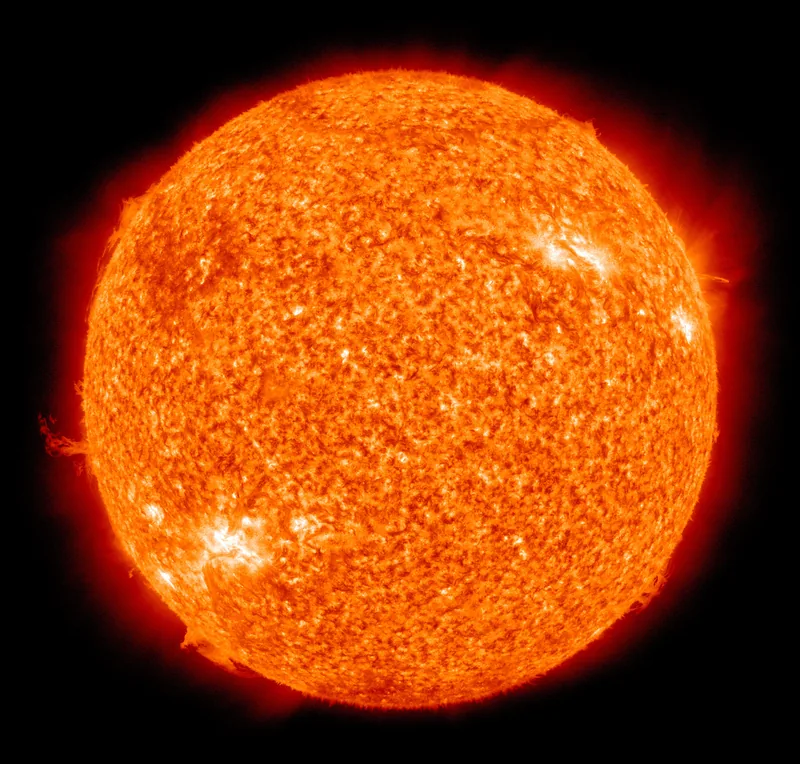 | Sun | 1,392,700 km (865,384 mi) | diameter | The Sun is the star at the centre of our Solar System. |
| Proxima Centauri | 214,000 km (132,973 mi) approx. | diameter | Proxima Centauri is the nearest star to the Sun. | |
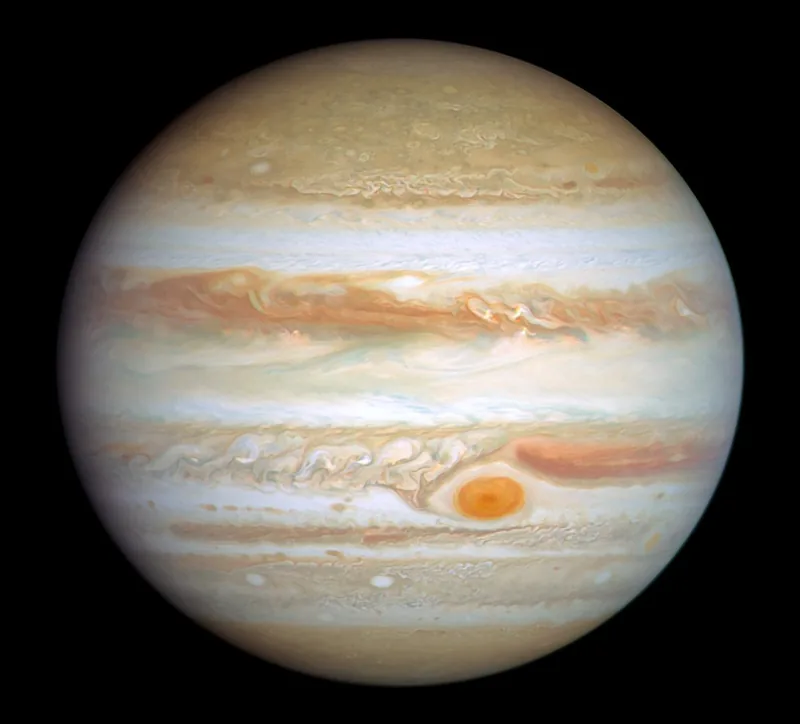 | Jupiter | 139,820 km (86,880 mi) | diameter | Jupiter is the largest planet in our Solar System. |
| Saturn | 116,460 km (72,365 mi) | diameter | Saturn is known for its wide, bright rings. | |
| Uranus | 50,724 km (31,518 mi) | diameter | Uranus is an ice giant that rotates on its side. | |
| Neptune | 49,244 km (30,599 mi) | diameter | Neptune is the farthest planet from the Sun. | |
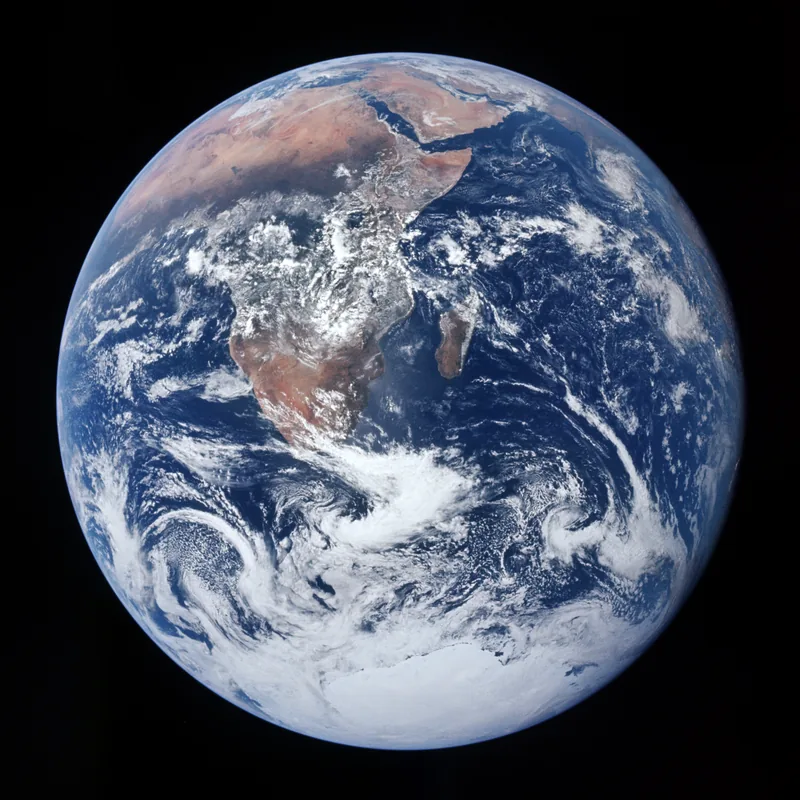 | Earth | 12,742 km (7,917.5 mi) | diameter | Earth is the third planet from the Sun and our home. |
| Venus | 12,104 km (7,521.1 mi) | diameter | Venus is the hottest planet in our Solar System. | |
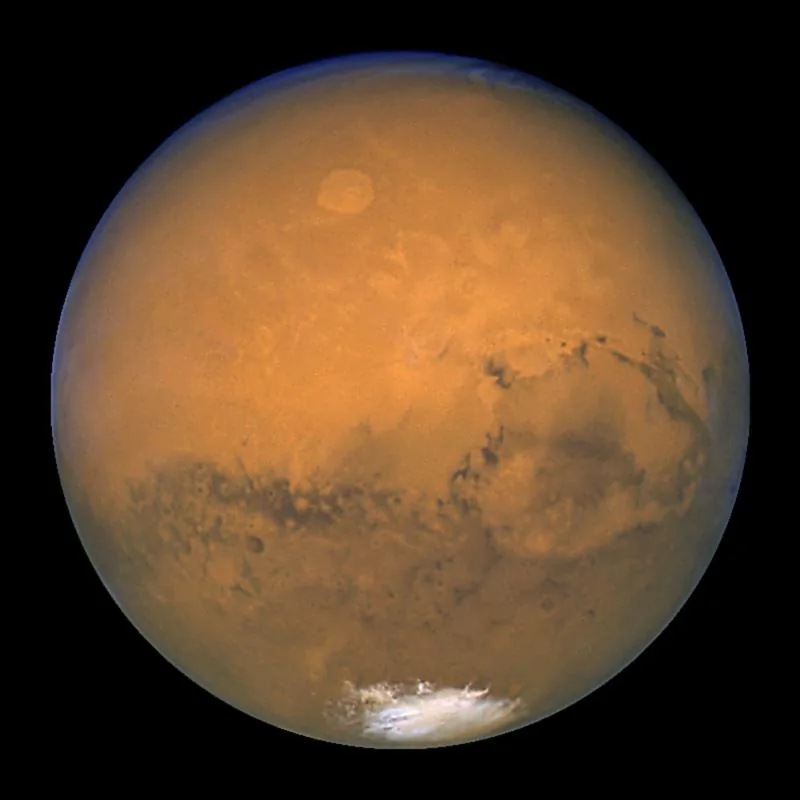 | Mars | 6,779 km (4,212.3 mi) | diameter | Mars is known as the Red Planet. |
| Ganymede | 5,268 km (3,273.4 mi) | diameter | Ganymede is the largest moon in our Solar System. | |
| Titan | 5,150 km (3,200.1 mi) | diameter | Titan is Saturn's largest moon, with a thick atmosphere. | |
| Mercury | 4,879 km (3,031.7 mi) | diameter | Mercury is the smallest planet in our Solar System. | |
| Callisto | 4,821 km (2,995.6 mi) | diameter | Callisto is the second-largest moon of Jupiter. | |
| Io | 3,643 km (2,263.7 mi) | diameter | Io is the most volcanically active body in the Solar System. | |
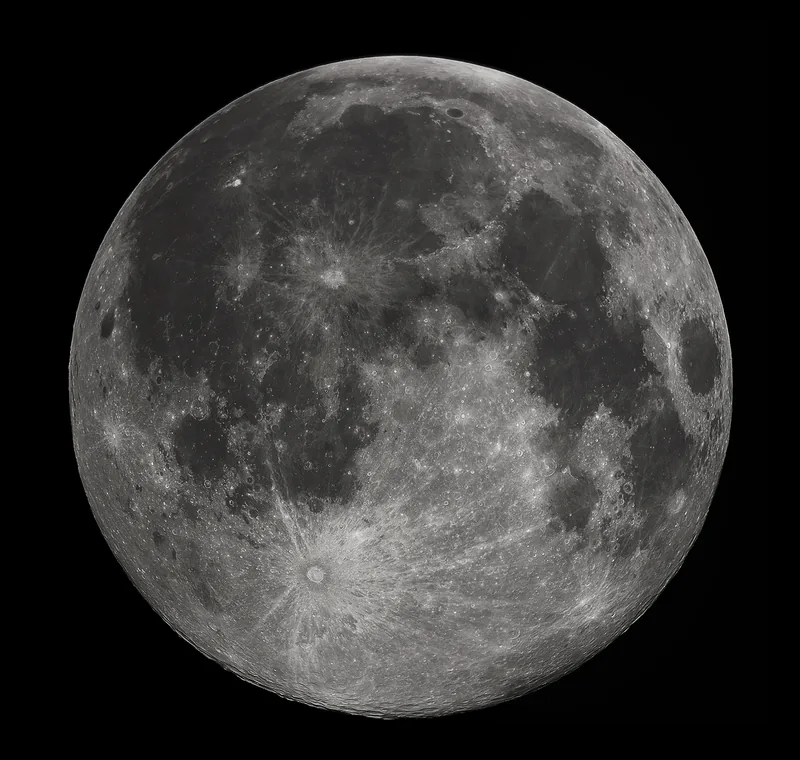 | Moon | 3,474 km (2,158.6 mi) | diameter | The Moon is Earth's only natural satellite. |
| Europa | 3,122 km (1,939.9 mi) | diameter | Europa is an icy moon of Jupiter with a subsurface ocean. | |
| Pluto | 2,377 km (1,477 mi) | diameter | Pluto is a dwarf planet in the Kuiper Belt. | |
| Ceres | 946 km (587.8 mi) | diameter | Ceres is the largest object in the asteroid belt. | |
| Asteroid Vesta | 525 km (326.2 mi) approx. | diameter | Vesta is one of the largest asteroids in the asteroid belt. | |
| Enceladus | 504 km (313.2 mi) | diameter | Enceladus is an icy moon of Saturn with geysers. | |
| Phobos | 22 km (13.7 mi) approx. | diameter | Phobos is the larger of Mars's two small moons. | |
| Halley's Comet | 15 km (9.3 mi) approx. | length | Halley's Comet returns to the inner Solar System about every 76 years. | |
| Deimos | 12 km (7.5 mi) approx. | diameter | Deimos is the smaller of Mars's two moons. | |
| Asteroid Bennu | 490 m (1607 ft 7 in) approx. | diameter | Bennu is a near-Earth asteroid visited by NASA's OSIRIS-REx. | |
| Starship | 121 m (397 ft) approx. | height | SpaceX Starship is the tallest rocket ever flown. | |
| Saturn V Rocket | 110.6 m (362 ft 10 in) | height | The Saturn V carried astronauts to the Moon. | |
| International Space Station | 109 m (357 ft 7 in) approx. | length | The International Space Station orbits Earth about 400 kilometres up. | |
| Falcon 9 | 70 m (229 ft 8 in) | height | Falcon 9 is a reusable rocket built by SpaceX. | |
| Space Shuttle | 56 m (183 ft 9 in) approx. | height | The Space Shuttle stack stood about 56 metres tall on launch. | |
| Tiangong Space Station | 55 m (180 ft 5 in) approx. | length | Tiangong is China's space station in low Earth orbit. | |
| Ariane 5 | 52 m (170 ft 7 in) approx. | height | Ariane 5 was a European heavy-lift launch vehicle. | |
| Soyuz Rocket | 46 m (150 ft 11 in) approx. | height | The Soyuz rocket has carried crews to space for decades. | |
| Skylab | 36 m (118 ft 1 in) approx. | length | Skylab was America's first space station, launched in 1973. | |
| James Webb Space Telescope | 21.2 m (69 ft 7 in) | width | The James Webb Space Telescope observes the universe in infrared light. | |
| Hubble Space Telescope | 13.2 m (43 ft 4 in) | length | The Hubble Space Telescope has observed the universe since 1990. | |
| Voyager 1 | 4 m (13 ft 1 in) approx. | length | Voyager 1 is the farthest human-made object from Earth. | |
| Apollo 11 Command Module | 3.2 m (10 ft 6 in) approx. | height | Apollo 11's command module carried three astronauts to the Moon. | |
| Lunar Rover | 3.1 m (10 ft 2 in) approx. | length | The Lunar Rover carried Apollo astronauts across the Moon. | |
| Perseverance Rover | 3 m (9 ft 10 in) approx. | length | Perseverance is a NASA rover exploring Mars since 2021. |
Click a name to open that item in the Compare tool. Sizes marked "approx." are approximate — see the note below. Use the metric/imperial toggle in the header to switch units; the toggle is saved in your browser.
Popular space comparisons
Compare any two items Play the Daily game
Sources
Sizes on this page come from the source families listed on our Sources page, including NASA and space agencies, encyclopaedias, Guinness World Records, official landmark operators, manufacturer specifications, national parks and geological surveys, museums and maritime references. Figures marked "approx." are approximate: animal sizes are species averages or typical adult sizes, geography figures vary by measurement method, and some vehicle and everyday sizes vary by model. Standardised items, such as sports balls, are not marked approximate. If you spot a figure that looks wrong, please tell us through our Contact page — corrections are welcome.
Browse other categories
- AnimalsCompare 45 by size
- SpaceCompare 45 by size
- LandmarksCompare 45 by size
- VehiclesCompare 45 by size
- Everyday ObjectsCompare 45 by size
- GeographyCompare 45 by size
- DinosaursCompare 40 by size
- Food & DrinkCompare 40 by size
- Sports GearCompare 40 by size
- InsectsCompare 40 by size
- Pop CultureCompare 40 by size