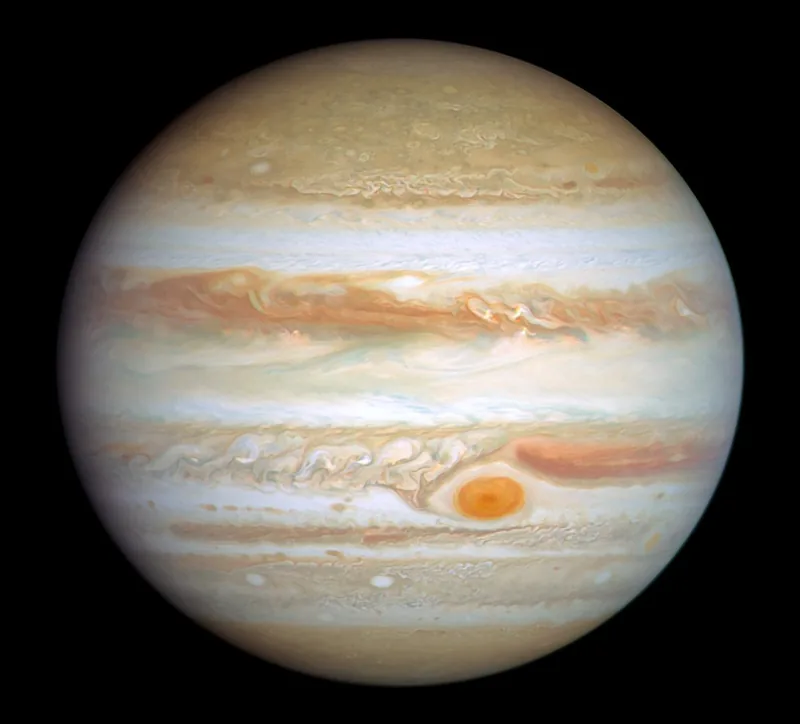
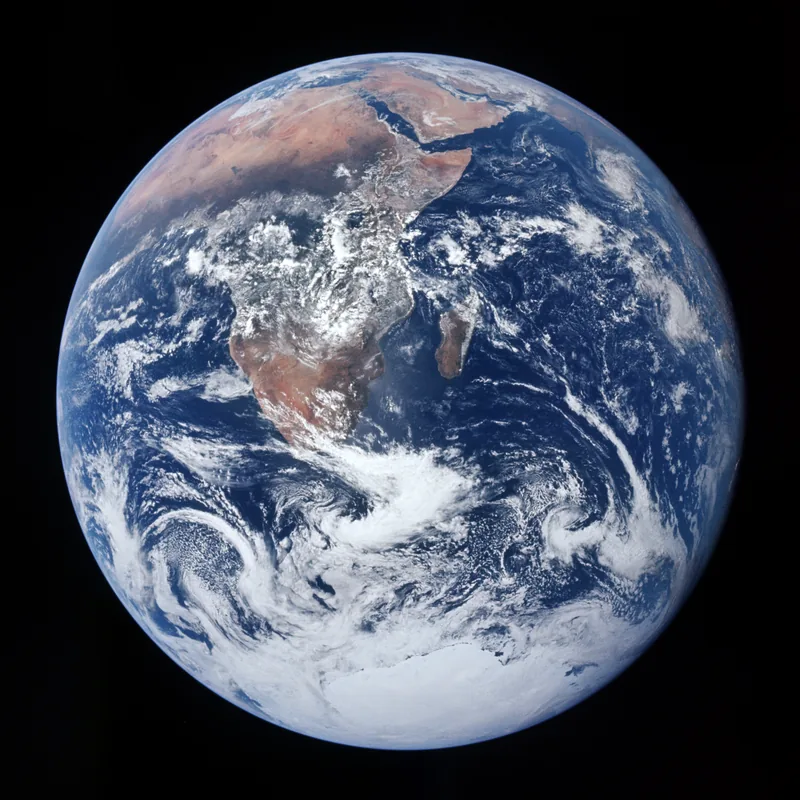
Jupiter — Jupiter is the largest planet in our Solar System. It measures 139,820 km (86,880 mi) (diameter). Earth — Earth is the third planet from the Sun and our home. It measures 12,742 km (7,917.5 mi) (diameter). Put the two together and the contrast is immediate: one of them is the reference point most people know, and the other is the surprise.
The numbers make the comparison precise. The Jupiter is about 11x the size of the Earth. Jupiter is about eleven times wider than Earth. That is the figure to remember, because it turns a vague feeling — “one is much bigger” — into something you can check. Both figures come from the sources listed on our Sources page, Neither figure is marked approximate, though both are rounded, typical values. Where a figure is a diameter, a height, a length or a width, we say so, because comparing a height with a length is not the same as comparing two heights.
Why does this comparison surprise people? Partly because the two things live in different parts of our experience. We meet Jupiter in one context and Earth in another, and we rarely have to hold both in mind at once. Our brains are good at judging the size of familiar things and poor at judging unfamiliar ones, so we fill the gap with a guess — and the guess is often wrong by a factor of two or more. That is the whole idea behind the Daily game: you are shown one thing and asked to guess another, and the gap between your guess and the truth is where the learning happens.
For everyday context, imagine lining them up. You would need about 10 of the smaller ones to match the larger one end to end, which is a useful way to picture a ratio that is otherwise just a number. Try it in the Compare tool, where you can add a third item — a human, a bus, a house — and see all three drawn to scale. Then test yourself in the Quiz, or share this page with someone and ask them to guess before they scroll down to the answer.