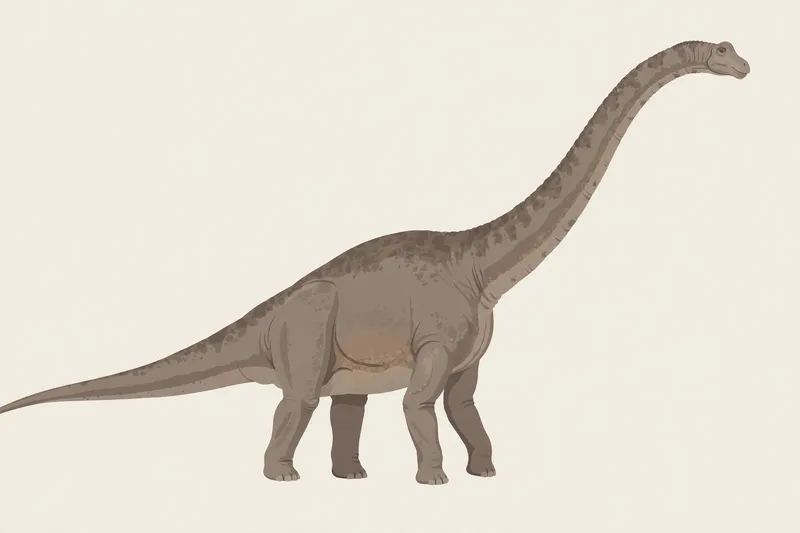
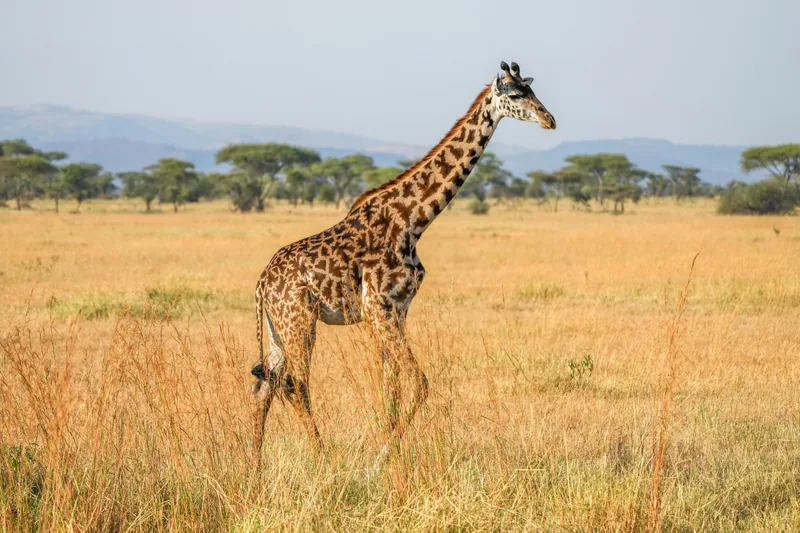
Brachiosaurus — Brachiosaurus was a tall long-necked sauropod that fed high in trees. It measures 25 m (82 ft) (length). Giraffe — The giraffe is the tallest living land animal on Earth. It measures 5.5 m (18 ft 1 in) (height). Put the two together and the contrast is immediate: one of them is the reference point most people know, and the other is the surprise.
The numbers make the comparison precise. The Brachiosaurus is about 4.5x the size of the Giraffe. Brachiosaurus was about four and a half times longer than a giraffe is tall. That is the figure to remember, because it turns a vague feeling — “one is much bigger” — into something you can check. Both figures come from the sources listed on our Sources page, and both are marked approximate. Where a figure is a diameter, a height, a length or a width, we say so, because comparing a height with a length is not the same as comparing two heights.
Both animals solve the same problem — reaching food high above the ground — with a very long neck, but Brachiosaurus takes the idea much further. A giraffe is already the tallest land animal alive, so it feels like the ceiling of what a neck can do; Brachiosaurus shows the ceiling was far higher. Standing next to a Brachiosaurus, a giraffe would barely reach its belly. That gap is the surprise: the tallest animal you can actually meet is less than a quarter of the length of one that walked the Earth long ago.
For everyday context, imagine lining them up. You would need about 5 of the smaller ones to match the larger one end to end, which is a useful way to picture a ratio that is otherwise just a number. Try it in the Compare tool, where you can add a third item — a human, a bus, a house — and see all three drawn to scale. Then test yourself in the Quiz, or share this page with someone and ask them to guess before they scroll down to the answer.