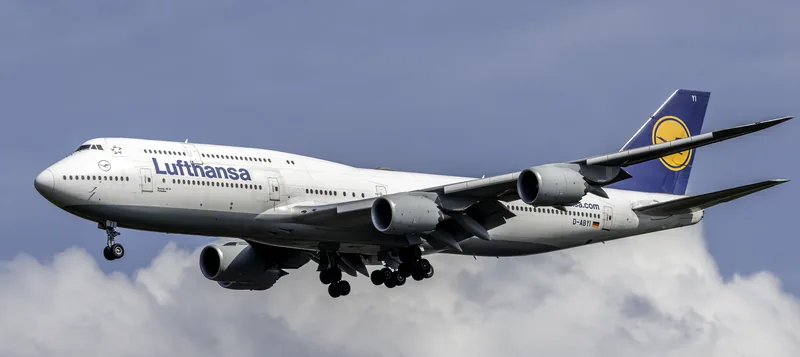
Mamenchisaurus — Mamenchisaurus had one of the longest necks of any dinosaur. It measures 22 m (72 ft 2 in) (length). Boeing 747 — The Boeing 747 is a large wide-body commercial airliner. It measures 71 m (231 ft 8 in) (length). Put the two together and the contrast is immediate: one of them is the reference point most people know, and the other is the surprise.
The numbers make the comparison precise. The Boeing 747 is about 3.2x the size of the Mamenchisaurus. A Boeing 747 is about three times longer than Mamenchisaurus was. That is the figure to remember, because it turns a vague feeling — “one is much bigger” — into something you can check. Both figures come from the sources listed on our Sources page, and the Mamenchisaurus figure is marked approximate. Where a figure is a diameter, a height, a length or a width, we say so, because comparing a height with a length is not the same as comparing two heights.
A passenger jet is one of the biggest things most people ever stand next to, and it still loses to a dinosaur by a wide margin — in length, at least. The comparison is deliberately fair in one way: the 747’s length is measured nose to tail, and Mamenchisaurus is measured the same way, so the numbers are genuinely comparable. What the bars cannot show is everything else: length is only one measurement, and a jet and a dinosaur differ in height, width and shape in ways a single bar cannot capture. The length comparison is a starting point, not the whole story.
For everyday context, imagine lining them up. You would need about 3 of the smaller ones to match the larger one end to end, which is a useful way to picture a ratio that is otherwise just a number. Try it in the Compare tool, where you can add a third item — a human, a bus, a house — and see all three drawn to scale. Then test yourself in the Quiz, or share this page with someone and ask them to guess before they scroll down to the answer.